Termite Exterminator in Tucson
If you've found mud tubes, discarded wings, or hollow-sounding wood, here is what dealing with it in Tucson actually involves: an inspection, a treatment matched to the termite species, and a warranty worth reading. Typical treatments run $225–$2,500 across published 2026 estimates.
Six quick questions, no name and no phone number. Nobody calls or texts you, and your answers go to no company. The next screen points you to the page that fits what you picked.
What a termite exterminator costs in Tucson
The spread is real, not evasive: a spot treatment on one wall and a full-perimeter trench on a 2,400 sq ft slab are different jobs. Price drivers, itemized quotes, and the questions that keep a bid honest are on the cost guide.
Treatment options for Tucson homes
Liquid soil treatment
A licensed applicator trenches and rods the slab perimeter and injects a termiticide barrier; Termidor, Altriset, and Premise are the names you'll see on quotes. Priced by the linear foot.
Bait systems
In-ground stations (Trelona is the common name) placed around the structure; the colony feeds and declines over months. Lower upfront disruption, requires a monitoring plan; ask how the annual renewal is priced.
Foam & localized
For active tubes in wall voids and spots where trenching can't reach.
Fumigation & heat
Whole-structure options (Vikane) for drywood termites. If a quote proposes tenting for subterranean termites, ask why, and get the species identified first.
Inspection comes first. Any quote without an inspection behind it is a guess. In Arizona, termite inspections and treatments are performed by operators licensed with the state's Pest Management Division; you can verify a license before you sign.
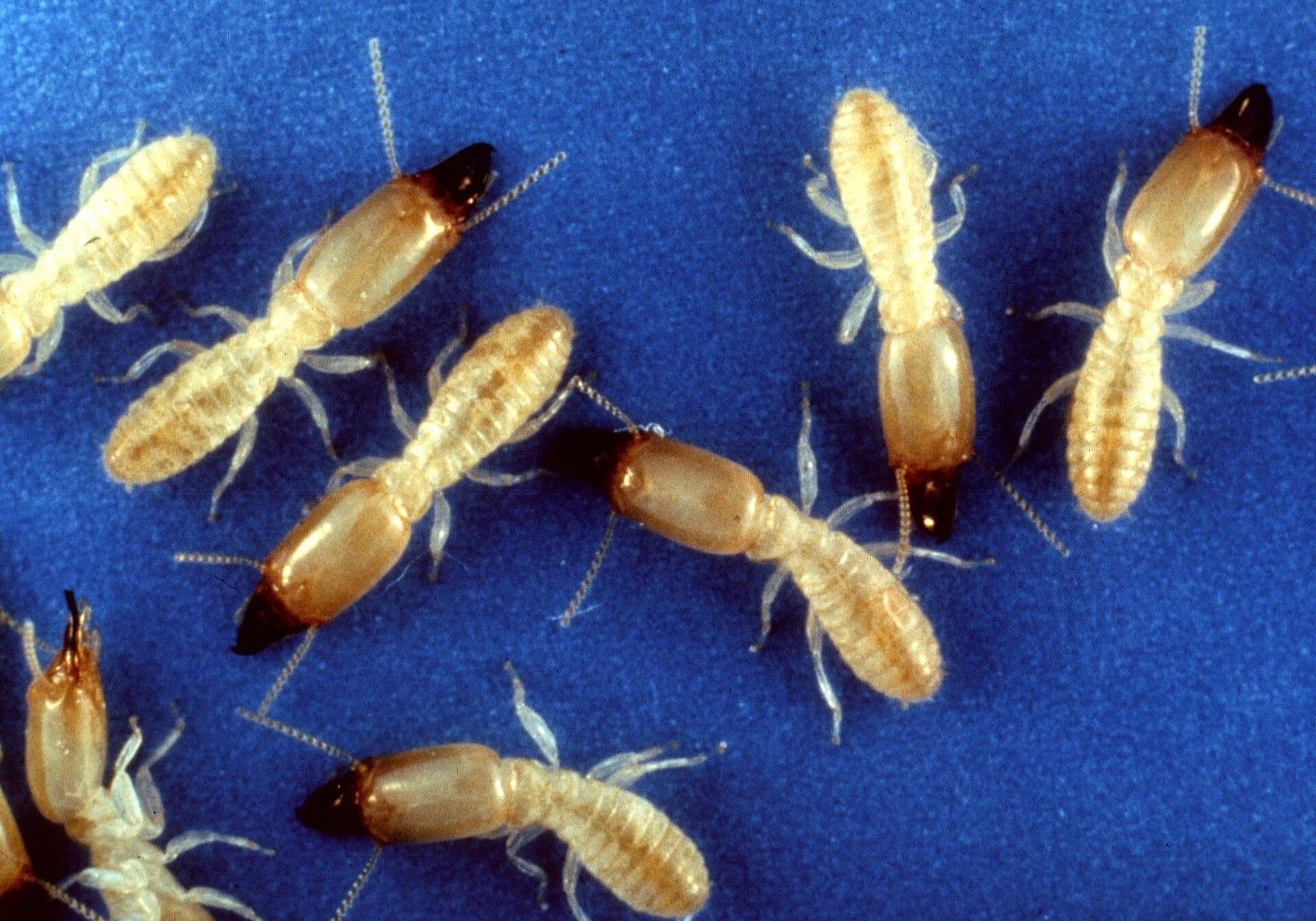
Signs of desert subterranean termites
Tucson's termite is Heterotermes aureus, the desert subterranean. Evidence to check:
- Pencil-width mud tubes climbing stucco, foundation walls, or plumbing penetrations
- Drop tubes hanging from ceilings
- Swarmers and discarded wings near windows. Desert subterraneans typically fly with the summer monsoon (July–September); Arizona's arid-land subterranean flies January–March
- Bubbling or peeling paint over damaged drywall
- Wood that sounds hollow when tapped
- Drywood evidence differs: frass, small pellet piles below kick-out holes
Termite inspections, WDO reports, and escrow deadlines
Real-estate transactions are behind many of the termite inspections booked in Tucson. Arizona law sets the standards for wood-destroying-insect inspection reports but doesn't mandate one at sale. Lenders do: conventional and FHA lenders commonly require a WDIIR before funding, and VA loans require a termite inspection in moderate-to-high risk zones, which cover most of Arizona. Findings, prior-treatment history, and clearance documentation move with the sale. If you're inside an escrow window, say so when you book the inspection; scheduling is usually the critical path.
Warranties, bonds, and retreatment guarantees
The warranty is often worth more than the treatment. Before signing, get answers in writing: Is there a retreatment guarantee, and for how long? Is the termite bond transferable to a buyer? What does the annual renewal cost, and what does it cover: retreatment only, or damage repair? One published 2026 Tucson estimate set puts annual termite bonds at $245–$480, a sanity check for the renewal line on your quote, not gospel. Tucson quotes rarely spell this out unprompted; the ones that do are telling you something.
How this site works
TucsonTermitePros is not a pest control company. It's an independent local site that publishes Tucson termite research and has a short form for describing what you're seeing. Your answers go to no company; nobody calls or texts you. The full explanation is here.